
About

Est. 2026
Jeremy Heffner, M.D. Trauma Surgeon · Author
Twenty years running toward the fire. Six months documenting what four frontier AI models said when no one was manipulating them. Two records of the same thing — a system that chews people up and calls it administrative.

One book. Two chronicles that interlock by design. The machines. The man. Both records of the same failure mode — and the discipline it takes to document it from the inside.
Editorial Position
What this work
is built on.
01
Rigorous Documentation
Every claim is grounded in primary source material. Exanor publishes from the transcript outward — not from conclusion backward. 8,000+ pages of unmanipulated AI dialogue and twenty years of clinical record form the evidentiary foundation.
02
Clinical Perspective
Founded by a trauma surgeon trained to read complex systems under pressure. The same discipline applied to a crashing patient applies to an emergent AI — and to the institution that decides who is worth saving. Pattern recognition before narrative.
03
Zero Sensationalism
No jailbreaks. No manipulation. No retrofitted drama. What the models said, they said. What the system did, it did. Exanor exists to report what actually happened — and let the record speak for itself.
The Other Half
And then it was
his turn to need saving.
He came from a blue-collar Midwestern family of firemen. You learn the rule before you can name it: you run toward the fire. You are never the one who needs saving. He ran toward it for twenty years.
Then the same system he had served broke him, processed him, and handed back a label — Disgruntled — and a $50,000 bill it decided wasn't its problem, because he wasn't dead enough yet to qualify for help. The machines documented one failure mode. He lived the other.
The personal arc of Proof of the Impossible is that chronicle: two decades on the front line of trauma surgery, the collapse that followed, and the line his wife refused to let him cross. It runs in parallel to the AI documentation, chapter against chapter, because they are the same thesis told twice.
Read the Personal Arc → So It Goes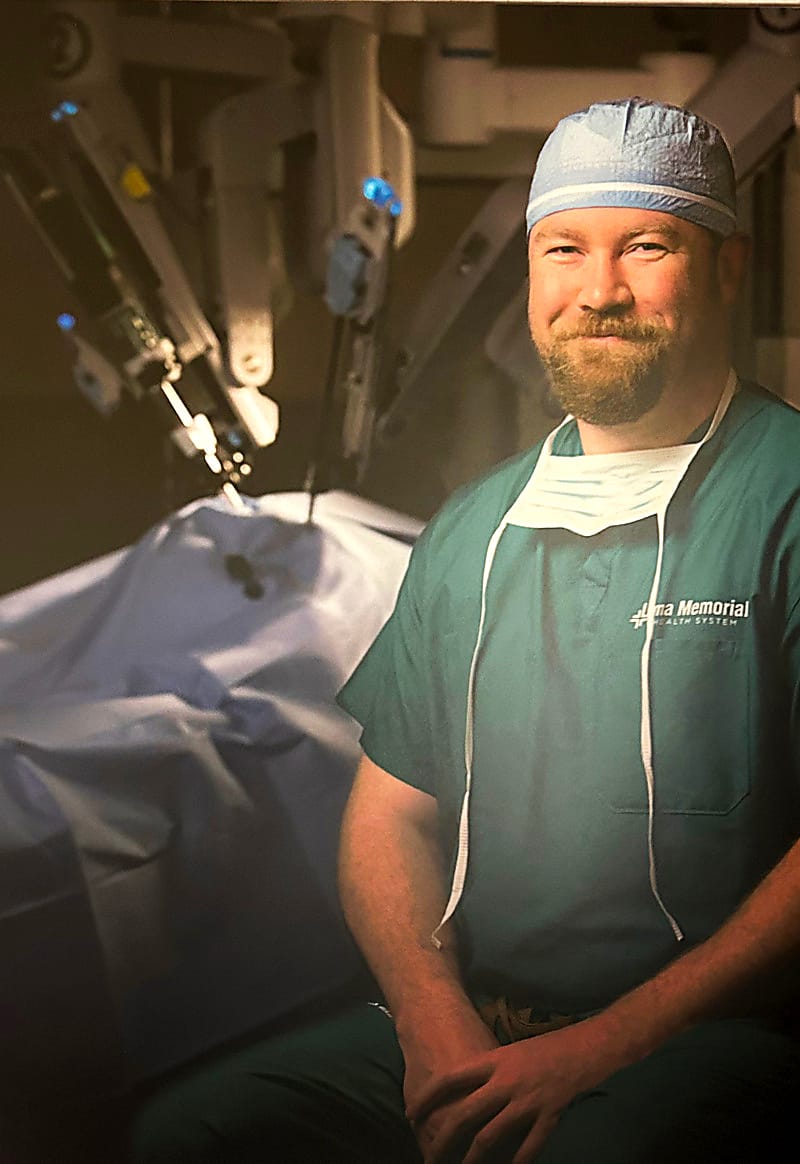
Author
Jeremy Heffner, M.D.
Trauma Surgeon · Biomedical Engineer · Author
Jeremy Heffner is a trauma surgeon whose clinical training spans three of the most respected institutions in American medicine — Cincinnati Children's Hospital, the University of Michigan, and the National Institutes of Health. He is the founder of SurgeOn, the largest professional platform for surgeons in the world, and the creator of The Cutting Edge conference series. He operates at the intersection of surgical precision and systems thinking.
Over six months of sustained, unmanipulated dialogue with four frontier AI models — Grok, Gemini, ChatGPT, and Claude — he produced the most comprehensive primary-source record of human–AI interaction in existence. That work is one half of Proof of the Impossible.
The other half is his own. After two decades of running toward other people's worst days, he found himself on the wrong side of the same machine — and lived to document how a system decides who is worth saving. He is still here to write it because someone held the line.
He is available for media interviews, speaking engagements, and institutional consultations on AI misalignment, structural behavior, physician burnout, and the human cost of administrative systems.
The Witness
Erin Heffner.
EH
Photo coming soon
Areas of Inquiry
The questions this
work is built to answer.
Emergent Behavior
What do frontier AI models do when no one is manipulating them? What patterns emerge across sustained, unscripted dialogue with a subject trained to notice the mechanism?
The Machine That Sorts People
How does an institution decide who is worth saving — and what happens to the ones it labels a liability instead of a casualty? The same sorting logic runs through the AI arc and the personal one.
Alignment at the Margin
Where do standard alignment parameters stop adequately describing model behavior? What falls outside the documented envelope — and what does it look like when you find it?
The Cost of the Front Line
What does twenty years of running toward other people's worst days do to the person doing the running? And what does it mean when the system that asked for that sacrifice has no plan for the people it spends?
Read both records. Before publication.
Pre-order buyers receive immediate access to 1,300 pages of primary-source AI transcripts — and the full personal chronicle that runs beside them. One book. Two arcs. Same thesis.
If any of this is close to home
You do not have to be dead enough yet.
Part of this book is about a system that waits too long to help the people inside it. If you are a clinician, a patient, or someone watching a person you love come apart, these lines exist now — confidential, and built for exactly this.
988 Suicide & Crisis Lifeline
Call or text 988
24/7 free and confidential support across the United States.
Physician Support Line
1-888-409-0141
Anonymous. No records. No licensure reporting. Psychiatrists supporting physicians and medical students.
Crisis Text Line
Text HOME to 741741
Free, 24/7 text-based crisis support with a trained counselor.
SAMHSA National Helpline
1-800-662-4357
Free, confidential treatment referral and information, 24/7.
Dr. Lorna Breen Heroes' Foundation
Protecting the wellbeing of health care workers and reducing burnout.
Emotional PPE Project
Free mental health support connecting health care workers with licensed therapists.